Sunday, 19 September 2010

Symposium on controversial issues in prisons

I will be speaking in Preston this week.  Full details of the event are:

British Society of Criminology (NW Branch)
Symposium on controversial issues in prisons
Harrington Lecture Theatre, University of Central Lancashire,
September 22nd 2010

Programme

9.00 – 9.30 - Welcome and registration

9.30 - 11.00 Morning Session: Exploring controversial issues in prisons (part 1)
  • David Scott, University of Central Lancashire -Thinking about controversial issues in prison
  • Deborah Coles, INQUEST - Self inflicted deaths of women in prison
  • Barry Goldson, Liverpool University - Child incarceration, state-sanctioned violence and cultures of impunity
11.00 – 11.30 Coffee Break

11.30 – 13.00 Morning Session: Exploring controversial issues in prisons (part 2)
  • Toby Seddon, Manchester University - Mental health in prison
  • Elaine Crawley, Salford University  - Elder prisoners
  • Helen Codd, University of Central Lancashire  - Families of prisoners
13.00 - 14.00 Lunch Break

14.00 – 14.55 Afternoon Session: Responding to controversial issues in prisons (part 1)
  • Joseph Trueman - A view from an ex-prisoner
  • Jamie Bennett, HM Prison Service - Prison Managerialism: How prison managers respond to controversial issues
14.55 – 15.05 Short Interval

15.05 – 16.00 Afternoon Session: Responding to controversial issues in prisons (part 2)

  • Joe Sim, Liverpool John Moores University -We Are All Liberals Now: Science, prison staff and the Prison-Welfare Industry
  • John Moore, University of West England  - The limits of penal reform
16.00-16.15 Close of symposium

For further information and / or to register for your free place and free buffet lunch please contact David Scott

Mumsnet -v- M&S

"Hooters" a nasty sexist "family" restaurant who require their staff to be sexual harassed has recently decided to move into the UK.  Bristol is one of the cities they want to open in.  They have managed to sublet a former Marks & Spencer's "Simply Food" outlet on the harbour-side.  Bristol Council have agreed the necessary planning permission.

The plans to open the branch seemed to steamed ahead when one local Bristol woman, JessinAvalon decided to express her opposition on Mumsnet, a social network for predominately affluent middle class women in their 30s and 40s. I have been watching the responses and the tactic of the mumsnetters have been to target M&S, where I suspect many of them spend rather a lot of money.  M&S has resisted to date, claiming their decision to sublet to Hooters is commercial and in no way endorses the company, its sexist employment practices or its sexist products.

M&S have an existing relationship with Mumsnet and are listed on their front page as supporter of the Let Girls be Girls campaign.


If this is true it will be interesting to see if this decision really was in M&S's commercial interest.  Whatever rent M&S is getting for their Bristol property is likely to be dwarfed by the amount charged to the high credit limit plastic the mumsnet women flash in their stores.  If the boycott takes off expect a rapid retreat by M&S.

The campaign is now spreading into the broadsheets with the Indie on Sunday and the Sunday Telegraph both running stories today.  Both stories provide excellent publicity for Mumsnet and very bad publicity for M&S.

M&S were earlier this month one of the British retailers caught up in a sweatshop scandal with workers at their suppliers forced to work 18 hours a day at rates as low as 25p an hour

Sharing the pain? Pull the other one!

David Cameron, George Osbourne and Nick Clegg have claimed time and time that we must all share the pain of sorting out public finances. But how does the coalitions walk compare to its talk.  Unfortunately the evidence is increasingly that it doesn't.  Whilst the weakest and most vulnerable are being targeted to take the brunt of the cuts the richest and most powerful are continuing to be allowed to plunder the public finances.

Whilst public attention over recent weeks has focused on Government attempts to cut a further £4 billion of disability benefit with Nick Clegg telling the disabled that benefits were not there "to compensate the poor for their predicament" Private Eye this week revealed that the Government had agreed to let corporate giant Vodaphone off a £6 billion tax bill.

The Eye also reveals the deal was negociated by Vodaphone by a former senior HMRC official who moved to the darkside to head the team seeking the tax windfall.  Vodaphone's Finance Director is also an unpaid (sic) advisor to the Chancellor on corporate tax.

If it stinks it is likely to be because it is rotten!


PS Well done to the Indian Tax Authorities.  On a very similiar deal they refused to cave into Vodaphone and took the tax cheats to the courts and won this month.

Sunday, 12 September 2010

Rousseau on private property

The first man who, having enclosed a piece of ground, took it into his head to say, “This is mine”, and found people simple enough to believe him, was the true founder of civil society. What crimes, wars and murders, what miseries and horrors would the human race have been spared if some one had torn up the stakes, or filled the ditch, and cried out to his comrades; “Beware of heeding this imposter. You are lost if you forget that the fruits of the ground belong to all, and the ground itself to no one”

(JJ Rousseau, ‘Discourse upon the Origin and Foundation of Inequality among Men’, in The Social Contract and Discourses, trans GDH Cole. (London 1966) p. 192)

Saturday, 4 September 2010

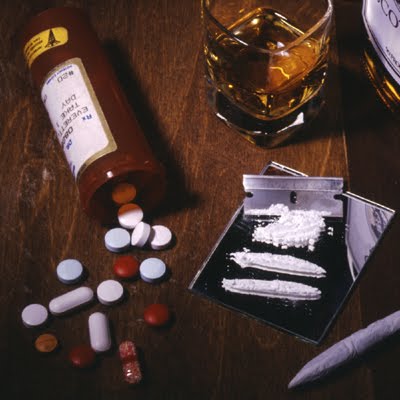
Adam Smith Institure argues for legalisation of drugs to reduce prison population

From the Adam Smith Institute's blog

The Adam Smith Institute has advocated a more sensible policy, involving the medicalisation of addictive and damaging drugs, and the legalisation of recreational drugs. Such a policy would eliminate the financial burden of incarcerating drug offenders, as well as the need to expend precious resources to police drug-related crimes. The decriminalization of drugs, as has been successfully completed in Portugal with positive results, has the potential to save the British taxpayer money, and simultaneously improve the security and health of the general public. The coalition government should use this opportunity to inject sensibility into the criminal justice system and eliminate costly penalties for drugs

Thursday, 2 September 2010

Ketamine is 'magic drug' for depression

Claims the Daily Telegraph
A single dose of the drug Ketamine acts like "magic" lifting people out of depression in hours and lasting more than a week, scientists claim
Full article here

Whilst the Independent reports
Ecstasy can help the victims of post-traumatic stress overcome their demons, research has shown. In tests, the illegal dance drug had a dramatic effect on previously untreatable patients who suffered post-traumatic stress disorder (PTSD).
Is it any surprise that the drugs do work?

Wednesday, 1 September 2010

Fair Fines

The fine as a punishment has many advantages, it is swift, cheap to administer and does not have the labeling consquences of other criminal justice interventions.

However its main problem is fairness. A £1,000 fine is a minor inconvience to a rich person but has a massive impact on someone on benefits.  One way around this is the idea of "unit fines". Essential this results in the level of fine reflecting the income levels of those who are convicted.


The impact of this approach is highlighted by this BBC news story
A Swedish motorist caught driving at 290km/h (180mph) in Switzerland could be given a world-record speeding fine of SFr1.08m ($1m; £656,000), prosecutors say.


The 37-year-old, who has not been named, was clocked driving his Mercedes sports car at 170km/h over the limit.

Under Swiss law, the level of fine is determined by the wealth of the driver and the speed recorded.

In January, a Swiss driver was fined $290,000 - the current world record.

Local police spokesman Benoit Dumas said of the latest case that "nothing can justify a speed of 290km/h".

"It is not controllable. It must have taken 500m to stop," he said.

The Swede's car - a Mercedes SLS AMG - has been impounded and in principle he could be forced to pay a daily fine of SFr3,600 for 300 days

Sunday, 29 August 2010

Conference Time

Over the summer I try to get to a few conferences to hear reports on others research, catch up on old friends and meet new people.  This coming week I will be in Greece for the European Group for the Study of Deviance and Social Control's annual conference. If I can get access to the web I will post some updates on the conference.


Earlier in the year I went to a interdisciplinary conference in Bristol entitled Writing the Empire: Scribblings from Below. It was a really enjoyable few days with some excellent papers.  These are now available to listen to on the website of the wonderfully named Backdoor Broadcasting Corporation.  I strongly recommend a listen.

Thursday, 19 August 2010

Man is a social being. Real fulfilment for any person lies in service to his fellow men and women


A rat race is for rats. We're not rats. We're human beings. Reject the insidious pressures in society that would blunt your critical faculties to all that is happening around you, that would caution silence in the face of injustice lest you jeopardise your chances of promotion and self-advancement. This is how it starts and before you know where you are, you're a fully paid-up member of the rat-pack. The price is too high. It entails the loss of your dignity and human spirit.
Jimmy Reid (1932-2010)

This quote is from Jimmy's 1972 acceptance speach on his appointment as Rector of Glasgow University.  The full speach can be read here

Hat tip The Herald

Friday, 6 August 2010

Thought of the Day


I came across this observation from George Orwell:
We all live by robbing Asiatic coolies, and those of us who are "enlightened" all maintain that those coolies ought to be set free: but our standard of living, and hence our "enlightenment," demands that the robbery shall continue.
For those of us who want social justice and a sustainable planet the only answer is to be significantly poorer.

Wednesday, 4 August 2010

Podcast of the Public debate - Addiction: should we penalise or treat?


On April 8th I took part in a public debate at The Watershed in Bristol about how we respond to drugs.  The debate was recorded and is now available on the web as the August Philosophy Monthly Podcast.

You can listen to the Podcast here

Tuesday, 3 August 2010

BMJ on the health consquences of the War on Drugs

The British Medical Journal has started producing short videos.  This one is worth a view.
Strict laws on the criminalisation of drug use and drug users are fuelling the spread of HIV and other serious harms associated with the criminal market and should be reviewed, say experts. In this video, epidemiologist Elizabeth Pisani and other leading commentators describe which countries are leading the way in tackling HIV infection among injecting drug users.


Hat tip Transform

Saturday, 31 July 2010

Personality Disorders - The must have diagnoses for 2013


The American Psychiatric Association are busy preparing the fifth edition of their Diagnostic and Statistical Manual. The Manual whist claiming to be scientific is in fact the result of a series of heavily lobbied meetings which have widened the remit of the definition of mental illness to the point where nearly everyone could be considered a sufferer and appropriate for the prescription of medication.

For Big Pharma the Manual is a potential goldmine.  Every new condition will require treatment, normally in the form of a pill. Nikolas Rose has written in detail on this relationship. His article Disorders Without Borders? The Expanding Scope of Psychiatric Practice is well worth a read.

From when I worked at Penrose I have been concerned at both the lack of scientific back-up to the the concept of "Personality Disorders" and the misuse of the concept in the Criminal Justice System.  I am therefore horrified that the new draft lists at the end of the new lists of so-called Personality Disorders a brand new catch all one is being considered.
Personality Disorder Not Otherwise Specified

This category is for disorders of personality functioning that do not meet criteria for any specific Personality Disorder. An example is the presence of features of more than one specific Personality Disorder that do not meet the full criteria for any one Personality Disorder (“mixed personality”), but that together cause clinically significant distress or impairment in one or more important areas of functioning (e.g., social or occupational). This category can also be used when the clinician judges that a specific Personality Disorder that is not included in the Classification is appropriate. Examples include depressive personality disorder and passive-aggressive personality disorder (see Appendix B in DSM-IVTR for suggested research criteria
If it wasn't for the serious consequences of such a diagnoses it would be comic to invent a personality disorder for those of us that cannot quite squeeze into their other (very broad) categories.

Thursday, 29 July 2010

Italy to "Register" Homeless


This story from the excellent Statewatch.
The interior ministry published a decree on 6 July 2010 to establish a nationwide "anagrafe" (residents' register) for homeless people, which had been envisaged in law 94/2009 on public security, also known as the "security package", whose art. 3 point 39 provides for "establishing a purpose-made national register for people who do not have a fixed residence". The demographic services directorate of the department for internal and territorial matters within the ministry will be responsible for running it and will have access with a search function for "maintenance and updating purposes". It will carry fields concerning the registered position of homeless people. Town councils will have to load available data into the password-protected system by 30 September 2010, including data normally included in the "anagrafe" records, such as their name, surname, tax code, date and place of birth, place where their residence was last registered. The final field in the database entries will be reserved for the homeless, and when it is ticked and the user clicks the "load" (carica) icon, an entry will automatically be loaded in the homeless people's register. Their status as homeless people may be amended once the situation changes, and the database will be searchable, by name, surname and using their tax code [which every citizen is issued at birth].
After ordering that Roma people living in makeshift camps be identified in 2008, at least in Rome, Milan and Naples, the interior ministry is now proceeding to create a register of another group of "undesirables", homeless people. Like the previous measure, it is not a measure that arose out of concerns for their needs, but rather, it became a priority after a violent ordeal involving sexual violence suffered in Rome by a Dutch woman and her partner at the hands of two homeless Romanians in the summer of 2008, leading mayor Gianni Alemanno to call for the census that was being carried out for Roma people living in illegal camps to be extended to homeless people and those who live at the margins of legality.
The measure was included in the security law that was approved in July 2009. Hence, in both cases, the measures are announced with a clear emphasis on "security". It is likely that if criticism surfaces, justifications based on the need for the people in question to be protected or assisted will be voiced (as happened in relation to Roma children when the measures on Roma people were criticised as discriminatory), although the measures are introduced by the interior ministry for "security" purposes rather than by the ministry for social affairs.
Sources
Legge 15 luglio 2009, n. 94, "Disposizioni in materia di sicurezza pubblica" [pdf]
Ministero dell'interno, Decreto 6 luglio 2010, "Modalità di funzionamento del registro delle persone senza fissa dimora"
Ministero dell'interno, Dipartimento per gli Affari Interni e Territoriali, circolare n. 22, 21.7.2010. [pdf]
Il Messaggero, 24.8.2008; Alleanza Nazionale website, "Censimento per i senza fissa dimora"

Wednesday, 28 July 2010

BP Hires Prison Labor to Clean Up Spill While Coastal Residents Struggle

Interesting report in the Nation about how BP prefers to employ prisoners to clean up their mess rather than the workers whom their polution has put out of a job.  Apparently they are cheaper and easier to manage.
Employers like them because they are guaranteed a worker who's on time, drug-free, and sober and because they do get a tax break.
More about this story on the CAPS (Campaign against Prison Slavery) website.

Tasers

The recent death of Raoul Moat has highlighted the use of Tasers and in particular the new version which was used on Raul immediately prior to his death which is currently being tested by British Police.  I found this promotional film on the new Taser which was deployed against Moat.  Expect these to be used regularly in our local communities.


Update: 12.30
I have recently been accused of only publishing "bad" news.  So he is some good news - Taser International who make these weapons has just yesterday posted second quarter losses of $1.4 million.  The company has tried to reassure investors that it will turn the situation around by increasing sales by targeting private security companies and individuals - so maybe not all good news!

Tuesday, 27 July 2010

The relationship between crime and imprisonment.

I was going to write something about the relationship between crime and imprisonment when I came across this posting I made on the Guardian's CiF site on 9th September 2008.  It was in response to the proposal to build Titan jails.

The relationship between crime and prison is not as clear cut as both sides of this debate assume. The people we imprison are selected on the basis of their visibility, their vulnerability, their power (or lack of it) and because of their behaviour. Criminal justice agencies focus their efforts on those it is easiest to convict and often prioritise low hanging fruit (e.g. kids hanging around the streets) rather than more serious criminals who through their location, position or wealth are able to operate with impunity. Take a drug smuggler. Divide your cargo among four people who for whatever reason (but often poverty) are prepared to carry it. Three get through, one gets arrested. The smuggler makes very healthy profits, three of the mules get a few bob, and one gets a long sentence justified by a Minister who claims its shows she or he is tough on drug smuggling.

The SEU report commission by the government made clear that our prisons were full of the most socially excluded members of our society. Many of them have committed crimes, but it is the poor, the homeless, ethnic minorities, the educationally disadvantaged, victims of sexual abuse, the mentally ill and other powerless people who pay for their crimes by imprisonment. That doesn't mean that the rest of society is crime free. Of course it is not, but in general we do not pay for our crimes.

The reason why the most socially excluded tend to end up in prison is not because they commit more crime but because they are targeted by the criminal justice system.

Prisons are primarily places of punishment; of course there have been good programmes in prisons and certain prisons have for limited periods been positive places, but just because you see a flower in a desert you should not jump to the conclusion that deserts are good places to grow flowers. Prisons are bad places that, all other things being equal, damage those locked up in them, those who work in them and the families of both. We should oppose the buildings of these prisons because prisons are bad places; they are anti-social and will damage many people. But the solution does not lie in smaller prisons or any other type of prison. When a prison becomes a good place, which actual does good to those inside it, then eventually it is either closed or replaced with a punitive regime, the good place quite simply was no longer a prison, to res-establish it as such the good had to go and the pain substituted for it, it had to be re-established as punishment. We saw it with Norfolk Island in the 1840s, with Borstal after the Second World War and with Barlinnie special unit more recently.

We can't support a system that targets the vulnerable and powerless and inflicts pain on them by pretending that smaller units, NACRO running the resettlement or other recycled failed reformative bollocks with make them work. They work already, as places of pain and punishment. They have never and will never work as places of reformation. The problems which lead certain people to be selected for imprisonment are problems of social inclusion that need dealing with in the community.
The orginal article and comments can be read here. My text above is the same as I orginally posted.  However the links have been added.